Heritage attractions on the Isle of Wight
1. Osborne House
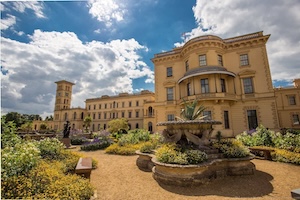
There are times on visiting the Isle of Wight where you have to wonder whether you've accidentally teleported yourself into a Mediterranean holiday paradise. The first glimpse of Osborne House, the holiday home and famously the favourite residence of Queen Victoria, is one of those moments. It was designed, in part by husband Prince Albert, to resemble an Italian Renaissance villa by the sea.
Since queening over a quarter of the world's population is an extremely tiring endeavour, Victoria was required to spend a great deal of time at her holiday home, especially after Albert's death. She died at Osborne in 1901, and the bed in which she ended her life is one of the most moving items on display here. As well as being surprisingly small for the ruler of the largest empire the world has ever seen.
The significance of India to Victoria's reign, and her affection for it, is evident in the incredible splendour of the Dunbar Room, which was designed in part by Rudyard Kipling's father. If the Jungle Book connection doesn't interest the kids, they will definitely love the horse and carriage ride down to the royal children's domain Swiss Cottage. This sort of Wendy house from the age of empire is where the junior royals gardened, cooked, and even ran household accounts.
Also nearby
Briddlesford Farm
Isle of Wight Steam Railway
How to get there
2. Dimbola Lodge
Dimbola Lodge is the home of Victorian-era photographer Julia Margaret Cameron, a good friend and neighbour of Alfred Lord Tennyson and one of the most significant figures in British photographic history.
The house is now a museum featuring her incredible dreamy, mythical wet collodion portraits. They are a Who's Who of the most important artistic, literary and scientific people of her era, and include Charles Darwin, Robert Browning, Lewis Carroll, Alice Liddell (the Alice from Carroll's Adventures in Wonderland), theatre megastar Dame Ellen Terry, Anthony Trollop, astronomer Sir John Herschel, and of course Tennyson himself, as well as staged mythical scenes from his poetry, featuring servants and local children.
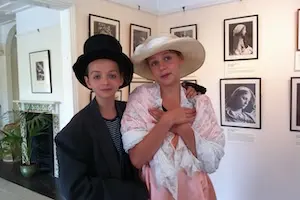
There is a ‘play’ Victorian portrait studio with a lot of period dressing up clothes to keep the kids occupied, as well as an old plate camera on a tripod. Often there are other photographic exhibitions on, including a permanent exhibition of prints from the iconic Isle of Wight pop festivals (’69-’70).
Also nearby
Freshwater Bay
Piano Café
How to get there
3. Farringford
Dimbola Lodge is the home of Victorian-era photographer Julia Margaret Cameron, a good friend and neighbour of Alfred Lord Tennyson and one of the most significant figures in British photographic history.
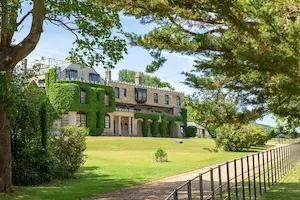
A very short distance away from Dimbola Lodge is Farringford, which was the home of English poet laureate Alfred Lord Tennyson, and about 10 years ago was painstaking restored from quirky hotel back to its original state, using seriously impressive levels of research, dedication and detective work. Fragments of wallpaper were used to recreate and reprint patterns using Victorian-era wallpaper manufacturing techniques; original pieces of furniture were recovered from as far away as New Zealand.
Tennyson turned Freshwater into a popular place for artists and writers in the second half of the 19th century. Famous visitors to the house include Lewis Carroll, Edward Lear and the Italian general Giuseppe Garibaldi (he of biscuit fame). A guided tour is the only way to see this house, and you must book well in advance to get a slot.
Also nearby
Dimbola Lodge
Piano Café
How to get there